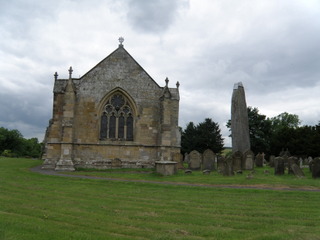
It is both surprising and stunning. As you come around the edge of Rudston church, there is the monolith, the tallest in England at 7.6 metres, with reputedly the same length buried under the ground. It is so unexpected that the stranger can only stop and admire. Of course, it predates the church by many thousands of years, and it’s presence says something very clearly. This is a holy site and has been for millennia. It is one of many henges, standing stones, circles and tumulus that still litter the landscape, that speak of a past now lost to us. Their silent witness tells of people who cared enough to put a huge effort into constructing and erecting monoliths such as this one. But why? We can only speculate. Speculate not only about the purpose, though that is grand enough. But who organised the fetching of the stone that forms it? Who fed the labourers, who had the knowledge and skill to erect a structure that has lasted thousands of years? They clearly had the leadership, resources and commitment not out of place in a modern company. Reflect on the fact that the monolith weights some 26 tons, and was transported a distance of 10 miles to its present site, and ask yourself the question, how far have we really progressed today?

 It sits on a shelf, in a little pillbox. I rarely look at it, yet somehow I am always aware of its presence. Not in a good or a bad way, but as though gravity is slightly heavier near to it. Tonight I took it out of its box and viewed it again. Compared to a modern coin, it’s tiny, light and not well finished.
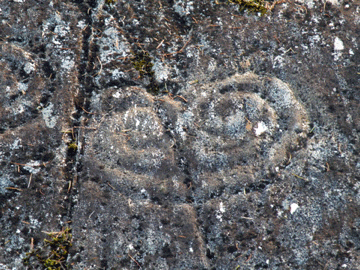 was inscribed with cup and ring markings. And more than that, cup and ring markings are to be found in abundance all over of Britain, and to a lesser extent, the world.
 another 2-3,000 years.
 Reflections on life in Poetry and Prose.