Hunting by Moonlight

DSC00546

It is the midnight hour.
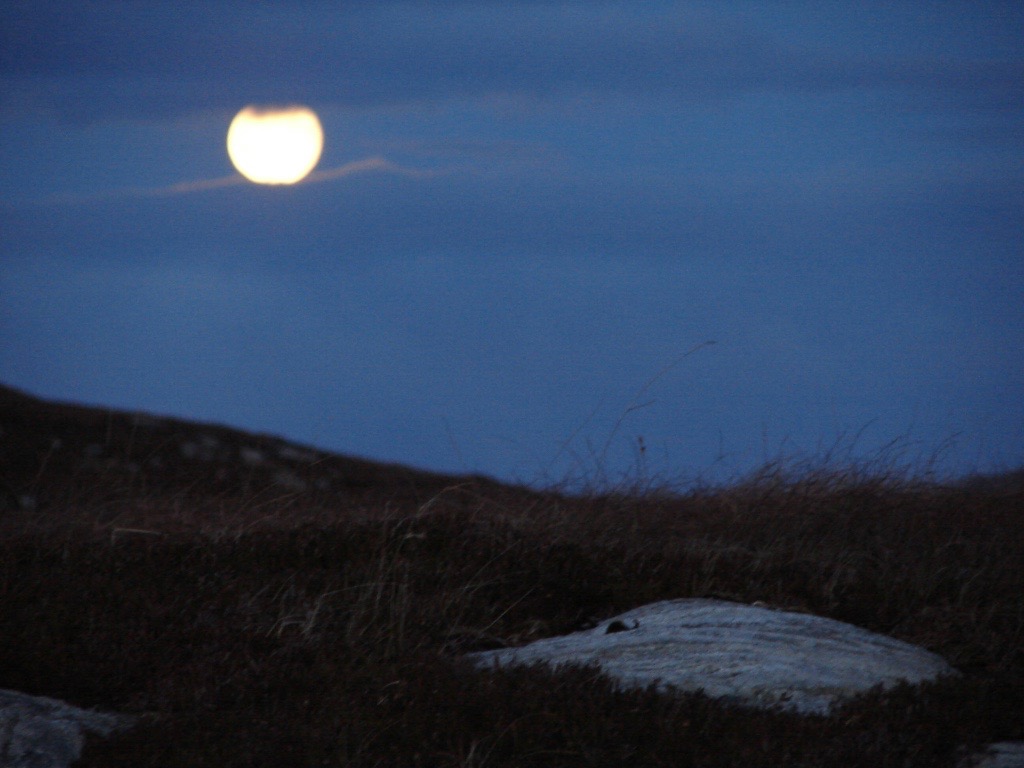
The full moon stalks the clouds
That hide her silvery light,
For you to hunt.

A gap in the cloudy veil
Moon bright
Floods the night,
Now, now stalk your prey

For you are man.
Strong, powerful,
Creature of the night,
Dominant, let all fear you.

A rustle of leaves
Alerted. Alarmed
Your prey turns, flees
In terror

For you are man,
None can face you
All powerful. All conquering
Flee they must.

Wait. What is that shadow you see?
Did it move? A trick of the light?
Where is that moonlight when you need it?
What glows red in the dark? Eyes? Can it be?

Now you too know fear. Perhaps there are things of the night
Never spoken of, that hunt and stalk
Seek their prey, creep ever nearer, waiting to pounce.
Now taste fear, in the horror of being – the prey.

A dream after seeing a sculpture

UNADJUSTEDNONRAW_thumb_8cdf
A creation by Tony Cragg

The words of the song speak the thoughts of the dawn.
Round, like a circle in a spiral, like a wheel within a wheel,
like the circles that you find, in the windmills of your mind,
Questions to be explored, layers concealing layers, perceptions dimly sensed.

Structured as if in a Tony Cragg creation,
The outer layer speaks, yet conceals what lies within,
Layer concealing layer, strata with its own timeline,
it’s own meaning, making a concealed contribution to the Whole.

What is it I fail to grasp? What moves just beyond my perception?
When I reach out to touch, what is it that moves away?
Elusive as a butterfly darting in the mind, one moment illuminated,
The next hidden, only the question remains, what lies below?

Below my ordinary perception, below the superficiality that surrounds,
Layer below layer, atom forming structure, concealing the quantum mystery,
Mystery wrapped within enigma. Is perception possible? Is it all an illusion?
Or instead, tantalising glimpses of the layers below?

Myth and legend swirl, concealing tradition and history,
One generation follows another, some forgetting, a few retaining,
Knowledge, understanding, but fast diminishing, leaving only distorted echoes,
Of what was once crystal clear. Now lost, only the faintest echo, sounds in the void.

What was there at the edge of my perception? In the dreaming swirl that comes,
As morning dawns, when the mind hovers between the clarity of the day and the dreamy mists of the night.
A glimpse perhaps of the hidden seams concealed within the mind? The magicians who move amongst the unseen layers?
Who make, form, breathes life into the mystery that is hidden? Come the dawn, the vision fades, grows faint, and only a diminishing echo remains.


ScuptureCreation.
I was fascinated by the way that Tony Cragg fashioned his sculptures. Beneath each layer, he places another layer, sometimes apparently unconnected with what went before, sometimes crafted by one of Tony’s assistants.

A different set of hands, eyes, meaning. Without seeing the creation from beginning to end in some kind of god-like way, how can anyone know the layers beneath the layers?

Know, let alone understand, what lies below? What is intended even? Just as we view a tree, not seeing the roots, the flow of the sap, the earth and air connections, and beneath all, the swirling movement of the Universe that embrace it and us.

(Tony Cragg is a British born sculptor who now lives in Germany. He is known for his exploration of unconventional materials, including plastic, fibreglass, bronze, and Kevlar. According to Art World, Craggs’ sculptures embody a frozen moment of movement, resulting in swirling abstractions.

The Land of Faerie


There, there, quickly. Ah, too late,
The door opens, closes and is gone.
You sit, wait and watch,
But tonight, the land of faerie is closed.

Sometimes though, when the time is right,
The veil lifts, parts, and reveals all.
Another world, embracing this one,
Glowing, glowing with the magic of the night.

Tiny figures move and dance, music fills the air,
And the sweet heady scent of magic draws you near.
Come, come join us, tiny voices cry, fear not,
Breathe deep, let your feet tap, now dance.

The music swirls, mists of the night enclose you,
But you care not, carried on the musical embrace,
That flings your soul to the stars and back,
Gladdens the strings of the heart and overwhelms the senses.

Wait, wait you cry, do not leave me, where go you?
It is you who leave us, the voices sing,
With the coming of the dawn, the two worlds, slip, slide, and
Part, the door closes, the veil shifts back, falls into place and the land of faerie is gone.

Left forlorn, the fading moon and the rising sun,
Look down on you, laughing at your plight.
What right have you to enter the land of faerie? They cry,
What right, what right, earthbound mortal?

But you care not. One drop of that elixir on the tongue,
One chord of that sweet music heard, one touch of the magic air,
And you are transported, enchanted, into the land of faerie,
Where the dance is all, lifting, lifting the soul to the stars.

Stop! Danger, danger a part of you cries,
Legend speaks of lost souls, doomed to wander,
Searching, seeking, but never finding their way back to this world.
Who cares, you sing, one minute there is worth a thousand years here.

Wait! What is that? Laughter, you hear their voices carried on the wind,
Let me back in, you cry, desperate to feel the magic,
To embrace the rhythm of the dance,
But, too, late, you are left forlorn, one last laugh, and they are gone.
Night Journies

UNADJUSTEDRAW_thumb_7ec8

Night
I went to bed full of love and mystery and journeyed on the wings of Morpheus. Far , far beyond the towers of Avalon and the walls of Babylon. Then down I plunged into the layers of reality that lie beneath our perception, concealed strata that sometimes boil and ripple, but more often are quiet and just whisper to the soul, Look, and you will see me, listen and you will hear me.

Nightfall
Night falls, moon rises,
Owl wakes, fox stirs,
Tiny prey, fearfully forage,
All feed, some survive.

Comes the day, departs the dark,
Sun’s warming rays, banish fears of the night,
On green meadows, flocks safely graze,
Protected by the light, yet fearful of the night.

Dusk comes, darkness looms,
Feared hunters, fearful prey,
Night stirrings, dark destruction,
The pattern, repeats, repeats.

Julian’s Bower

P1020700

IMG_2025 2

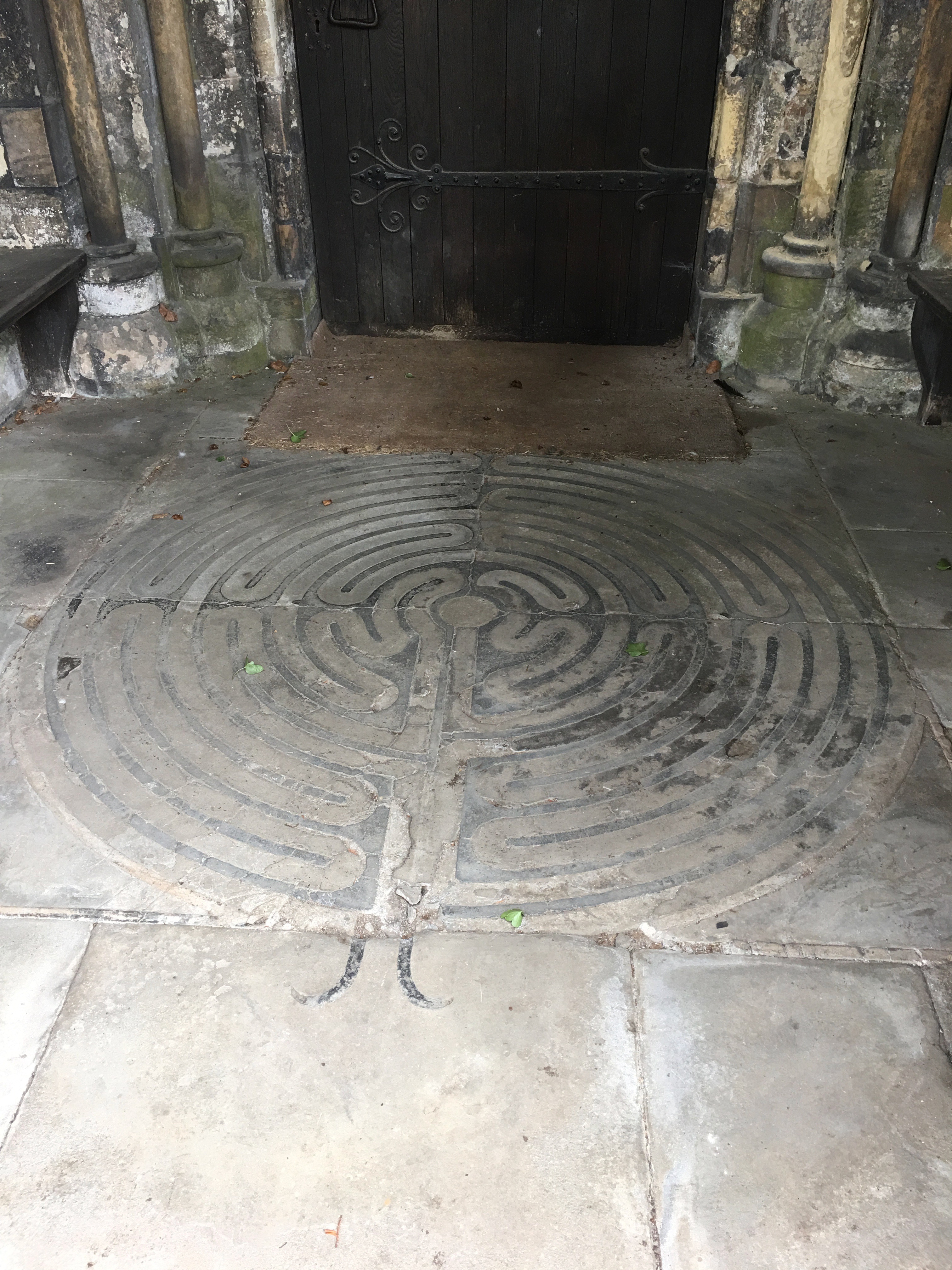
Julian’s Bower is a turf maze found in Alkborough in North Lincolnshire. Unusually there is a carving of the maze in the stone floor of the porch of the nearby church. (There is also a copy on the East window of the church, and on a gravestone in the nearby cemetery).

As the photo shows, the view from the maze is stunning, and on a fine day reveals the countryside for many miles around. But why a maze, and what purpose did they serve?

The idea of the maze goes back as far as the legend of Theseus and the Minotaur. Theseus, son of King Aegeus of Athens. He used a ball of wool given to him by Ariadne to mark his way through the labyrinth of the Minotaur in Crete, where he slayed the monster and retraced his steps with the aid of the thread and so to safety.

Perhaps the best theory is that this maze was carved by a small cell of monks who lived in the area until the 13th century, and that it represents the path through life to heaven. This would fit in with the carving in the porch of the church.

It is also thought that mazes were also used for penitential purposes, so sinners would be made to trace the path upon their hands and knees. Yet another theory is that mazes were a way to confound the Devil, who could only travel in straight lines.

Turf mazes are all unicursal, that is, they have no choices or branches, and there are a number still to be found across England. The dates for their creation are all guesses, since because they are turf, they have to be renewed frequently, or they disappear, as many presumably have.


510 years ago a tradition was born

It begins at 4.00 am when a flute band plays outside the houses of two of the main participants in the Selkirk Common Riding, a tradition that dates back to the Battle of Floden in 1508. Of the 80 men who left Selkirk to fight for the cause of James IV of Scotland, only one, Fletcher, returned.


P1020484
Selkirk Standard Bearer setting off on the Common Riding of 2018, accompanied by 300 other riders

But he came back bearing a captured English banner, and that is at the heart of the event.  Some 300 riders parade through the town, and most importantly the Standard Bearer and his attendants are at the heart of the event.

The pride of the community in their annual event is tangible, and if that isn’t enough to touch the heart of an onlooker, the sound of the bands will succeed, especially from the bagpipes of the Pipe Band.

Voices from the past

OLYMPUS DIGITAL CAMERA
Rudston Church, East Yorkshire, England

It is both surprising and stunning. As you come around the edge of Rudston church, there is the monolith, the tallest in England at 7.6 metres, with reputedly the same length buried under the ground. It is so unexpected that the stranger can only stop and admire. Of course, it predates the church by many thousands of years, and it’s presence says something very clearly. This is a holy site and has been for millennia. It is one of many henges, standing stones, circles and tumulus that still litter the landscape, that speak of a past now lost to us. Their silent witness tells of people who cared enough to put a huge effort into constructing and erecting monoliths such as this one. But why? We can only speculate. Speculate not only about the purpose, though that is grand enough. But who organised the fetching of the stone that forms it? Who fed the labourers, who had the knowledge and skill to erect a structure that has lasted thousands of years? They clearly had the leadership, resources and commitment not out of place in a modern company. Reflect on the fact that the monolith weights some 26 tons, and was transported a distance of 10 miles to its present site, and ask yourself the question, how far have we really progressed today?

OLYMPUS DIGITAL CAMERA

The Law on Bees

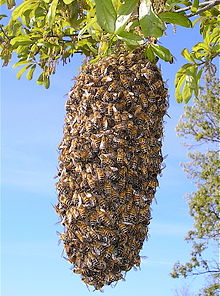
Bee_SwarmIn our modern world it’s hard to believe that that 30 pages of law could address the issue of how to deal with swarms of bees.  Yet according to Alistair Moffat in his book The Sea Kingdoms, both Irish and Welsh law had much to say on the subject.  Honey was a valuable commodity, the only sweetener available before the advent of sugar, and those pesky bees had a habit of moving.  And so Celtic lawmakers had the challenge of trying to regulate the management and ownership of bees.  As we worry about the demise of the bee population of today, perhaps our lawmakers might find some inspiration in their Celtic predecessors.

An ideal community? At least now.

We recently spent a week in the island of Skye, an island off the coast of Scotland, although technically no more an island, thanks to a majestic bridge that connects it to the mainland. The owner of the cottage that we had rented told us that Skye was a crime-free community, where people left their front doors unlocked and the ignition keys in their cars.  As an added bonus, it rarely snows on Skye, thanks to the close proximity of the Gulf Stream, which also makes it also generally frost-free.

Interestingly, only half of the people who live on Skye were born there, the rest being ‘newcomers”, yet the ancient language of Gaelic still flourishes. There appear to be no tensions within the community, such a huge difference between so many other places in this world.

But it wasn’t always like that.

UNADJUSTEDNONRAW_thumb_8fe1

The picture shows the remains of Trumpan Church located on the Vaternish peninsula. A plaque tells the story of a particularly brutal massacre, when the Clan MacDonald of Uist travelled to Trumpan in eight boats and under cover of a thick mist, barred the doors of the church, set fire to the thatched roof and burnt alive all the MacLeods who had come to worship there, with only a young girl able to escape.

She managed to get out of the one narrow window in the church, and sounded the alarm. This led to instant retribution by Clan MacLeod who killed all the invaders, before they had time to flee the island. This skirmish is known as the Battle of the Spoiling Dyke, named after the Dyke in which all the bodies were buried.

But Clan MacDonald themselves were only repaying in kind a massacre that Clan MacLeod had visited on them when in the winter of 1577, a band of MacLeods, intent on causing trouble, landed on the island of Eigg. The Clan members took refuge in a large cave, but one that had a narrow entrance. The tight opening of the cave made it hard to find but was also to be the clan’s downfall as the same constricted cave mouth stopped anyone from escaping.

The MacLeods were able to cover the cave mouth with straw and set it alight, suffocating all inside. History says that 395 members of Clan MacDonalds died that day.

And perhaps the lesson to be drawn from Skye? Times do change, sometimes for the better.